Game of Life. Cellular Automata in Art, Science, Architecture, and Games: A Creative Programming Course
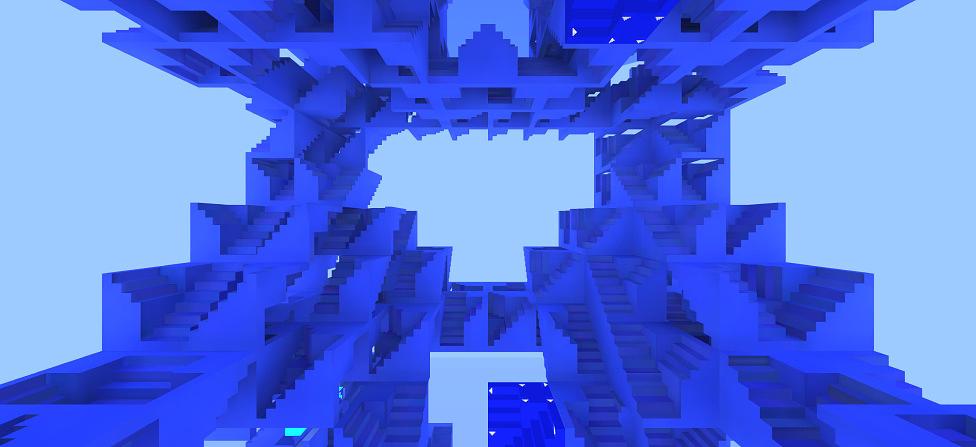
Course participants will learn about the work of mathematicians Stanisław Ulam, John von Neumann, Stephen Wolfram, and John Conway, about creative coding using JavaScript, about the fundamentals of web and game design and the principles of creating web pages using HTML, CSS, and JavaScript, and about working with 2D graphics and 3D spaces.
The practical sessions will include an exploration of cellular automata, mathematical models that can be used to create complex and self-organizing systems in various fields of science and art, including for creative projects, simulations, 3D spaces, and generating levels and the behavior of game characters. As a result of the course, each participant will create a project in a sphere of interest them—art, a simulation, an architectural object or a game.
The course comprises one offline session in the World Gone By computer class, four online meetings, and presentations of final projects, the format of which will be agreed together with the participants.
The course is designed for beginner programmers or those working with code for the first time. To take part all that is needed is a laptop without any special requirements in terms of programs or manufacturers.
Authors
Alina Chereiskaya
(b. 1989) is an architect and partner at SA lab, co-founder of the creative programming platform Kodiia, winner of the award Europe 40under40, a researcher into the influence of digital technologies on architecture, and a dissertation supervisor at Art&Science ITMO.
Stepan Kukharsky
(n. 1989) is an architect and partner at SA lab, a computer designer, co-founder of the creative programming platform Kodiia, and a tutor on international educational programs in the field of algorithmic design. He has been using algorithms to create architecture and landscapes for over a decade.
SA lab
A technologically oriented company founded in 2016 that develops architecture and landscapes in the digital and physical worlds. Projects include virtual pavilions, all-season public spaces, modular homes, pop-up spaces, tourist clusters, and video games. The main focus of SA lab is adaptive architecture that reacts to social, climatic, urban planning, and other parameters.