Situated Worlds OPEN CALL RESULTS
Garage Museum of Contemporary Art has selected the winners of the Garage Digital 2021/2022 grant program in support of artists.
They are:
Between June 12 and August 5, 2021 applications were received from over 200 artists from countries including Argentina, the UK, Germany, India, Canada, China, Colombia, the Netherlands, Russia, and the USA.
Due to the large number of applications, the program team decided to provide additional support for the project of Masha Danzis (Russia).
Each winner will receive a budget for the implementation of their proposed project and the opportunity to publish it on the Garage Digital online platform.
The Garage Digital grant program in support of artists aims to support and develop projects, artworks, and theoretical research driven by an interest in new technologies and media. The 2021/2022 grant program was entitled Situated Worlds.
Garage Digital grant program expert council:
Projects of the Winners of the Grant Program Situated Worlds
The Martian Word for World is Mother
Alice Bucknell
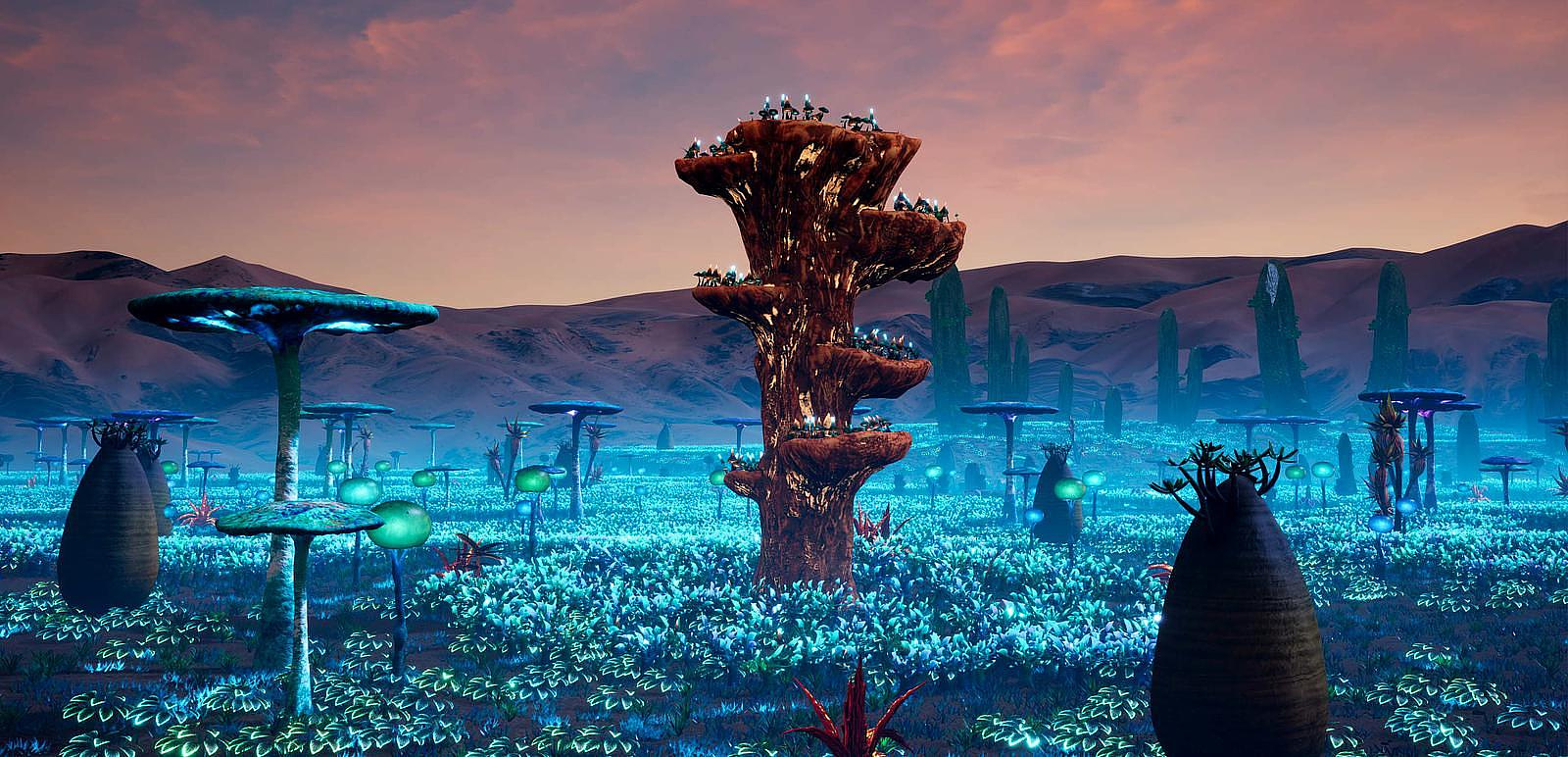
Merging science-fiction strategies, speculative biology, 3D world-building, language AIs, and contemporary architectural proposals for space colonization, The Martian Word for World is Mother draws new links between a speculative society on the Red Planet and our own.
The work uses the fantasy of an interplanetary future for humanity as an allegory to examine planetary systems here on Earth, while proposing non-anthropocentric futures for Mars. Picking up where sci-fi author Kim Stanley Robinson left off with the Mars trilogy and incorporating research on the Anthropocene and multispecies thinking posited by Donna Haraway, Ursula K. Le Guin, Anna Lowenhaupt Tsing, and Jackie Wang, among others, the project uses a virtual Mars world built in the game engine Unreal Engine as a lab for exploring the social, technological, and ecological entanglements of three speculative Martian settlements.
Drawing an unlikely link between Mars and Scotland that spans language, sociology, and geology, one of the project's settlements, an eco-feminist cult, expands on the possibility of non-human life on Mars by merging mysticism, rewilding, plant consciousness, and a speculative Martian-Gaelic language built with a Natural Language Processor (NLP) and the Language AI GPT-3. Other settlements critique ideas of terraforming Mars for Earthly settlement, proposed by the likes of Elon Musk, and a speculative bio-infrastructure resource extraction conglomerate augured by Silicon Valley demi-gods, which mines Martian permafrost for clean water and air to transport back to Earth. Borrowing from already-existent architectural propositions to settle Mars, ranging from eco-conscious smart cities drilled into cliffs to international “Martian training camps” on Lanzarote and in the Arabian Desert, the project blends real and rendered environments, setting the stage for an experimental and multimedia narrative that dissolves the line between fact and (near-future) fiction.
More generative links between Mars and the Earth blossomed long before interplanetary settlement became a near-future concern.
The Martian Word for World is Mother reclaims the haptic space of Mars as a site of entangled life, in order to imagine more-than-human futures for the Red Planet and our own.
Fire Almanac, issue 2: Pangaea Ultima
Dmitry Gerchikov, Ekaterina Zakharkiv, Maksim Ilyukhin, Ivan Kurbakov
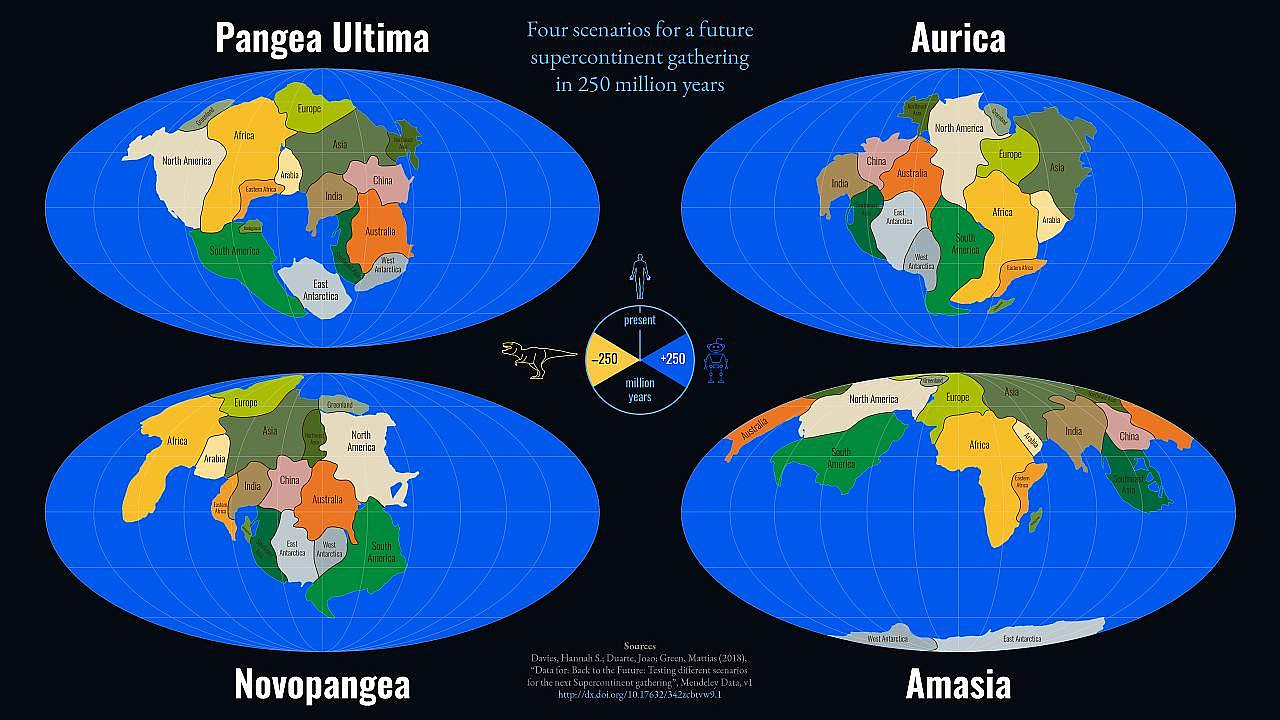
Garage Digital will support the publication of the second issue of Fire Almanac, which will retain its unusual form, this time focusing on contemporary anthropological and ancient mythological perspectives on humans as creatures in perpetual transformation, creatures through which the universe recognizes and knows itself via poetry, music, and visual media.
The geopoetic image chosen by the editorial group is of Pangaea Ultima, a hypothetical supercontinent, which, scientists predict, might form through the merger all the continents that exist today. They present the land, with its deserts, jungles, and mountains, as a space of articulated text and articulated visual environments, and the ocean as waves of vague visions and musical worlds.
This ocean may include islands of spontaneously formed theories and artworks, which are independent of existing and known concepts, being imaginary and parallel to them.
The editors aim to create a virtual environment, or a super continent, where a user, or an enchanted wanderer, will be able to interact with their ambivalent coexistence within one space, instead of with a structured and rigid material of texts and works; an experience similar to that of a child in an interactive quest, where they can choose what to take with them on their intellectual and aesthetic journey.
Sunken, yet forever on the surface of the heart
Sahil Naik
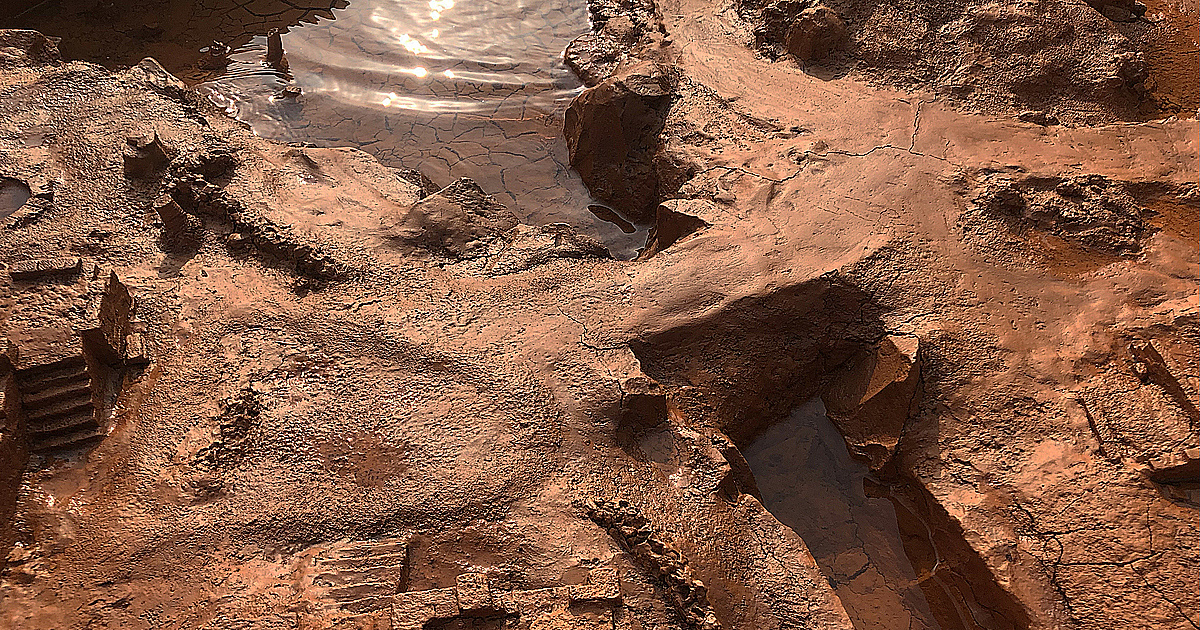
Sunken, yet forever on the surface of the heart (2021–) takes the form of a digital ecology of images, sounds, dioramas, simulations, and “walk-throughs” extracted from a range of manual, forensic, and conceptual exercises.
It attempts to produce agile, shapeshifting memories in the form of narrative, digital dreams (and nightmares) for a fast-deteriorating physical landscape and the people and memories tied to it.
Since 2016, Naik has been researching and documenting the village of Curdi in Goa, India. The construction of the modernist Selaulim Dam sank the village overnight, displacing thousands in the 1960s. Each summer however, the waters of the reservoir receded, and the village resurfaced briefly. Her people returned each year to symbolically occupy their homes and pray to the ruins. With warmer temperatures and irregular rainfall patterns, the deterioration of the structures has accelerated in recent years.
How can we preserve a landscape for future generations in the face of the ongoing climate catastrophe? How can we cultivate oral histories on to cold, three-dimensional, digital translations? This “video” work draws from the disciplines of geospatial mapping and cartography, archaeology and museum studies, navigational, first-person video games, and documentary forms to present an “encounter,” a sensorium that resists erasure.
Spallation
Anna Tagantseva-Kobzeva
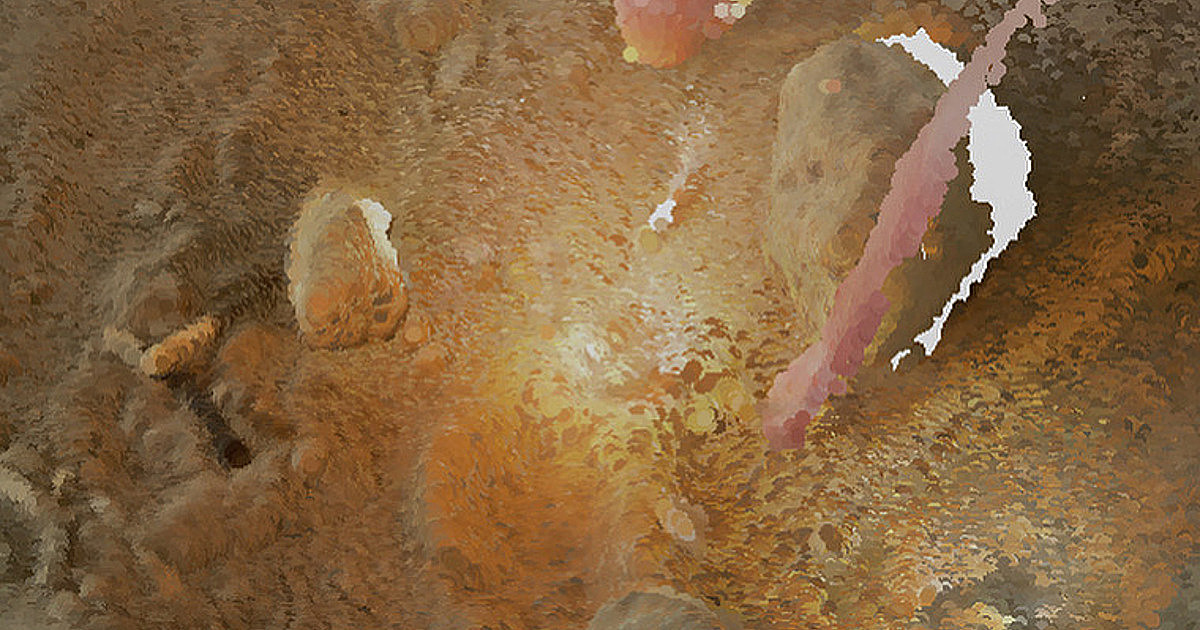
Anna Tagantseva-Kobzeva describes her new video series Fission as a non-narrative journey through the worlds of a semi-digital dream.
Drawing on ancient myths and religions, she finds in their visual codes and logic laws similar to those that contemporary virtual worlds are based on. Using a reworked anime aesthetic, she reinterprets the images of jinns, symbols of fire worship, and Zoroastrianism to study the contingency (necessary uncertainty) in principles of the construction of knowledge—be it mystical or technological—that determines the boundaries of contemporary worlds.
Botánica Transgénica (Transgenic Botanic)
Atractor Studio
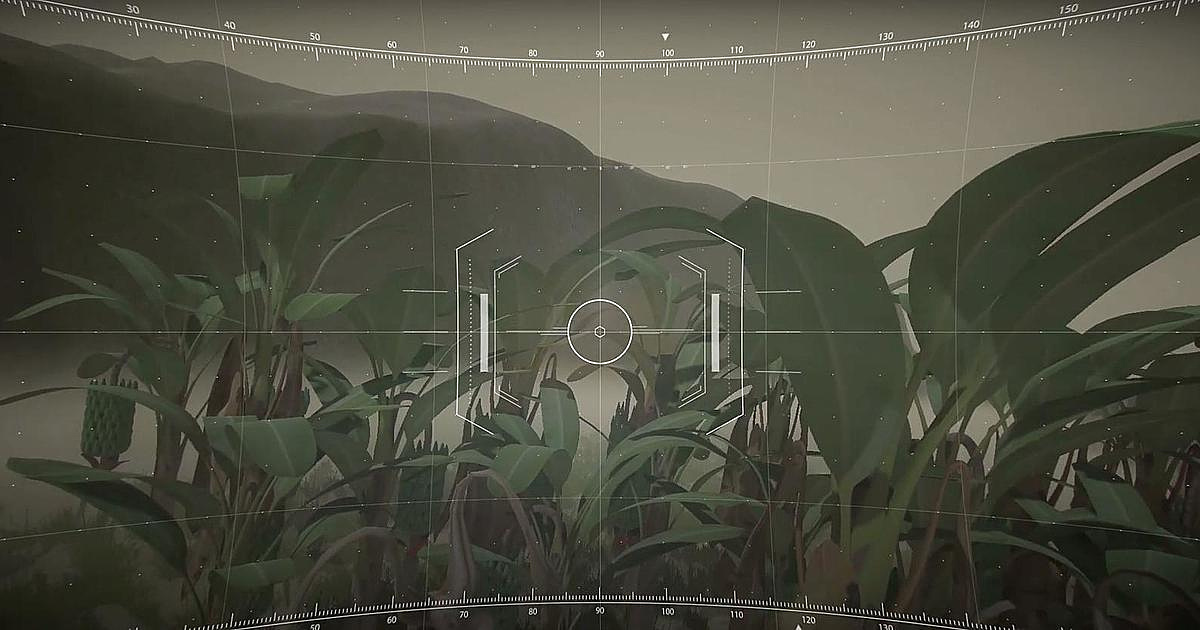
This project deploys a digital installation consisting of digital narrative/video game type experience of exploring a future Cavendish banana field infected with Fusarium Oxysporum RT-4 from the perspective of a) a drone that is inspecting the aftermath of the post-infection world and b) the sessile perspective of the cavendish plant and its strategies for growth and dissemination.
Today, more than 59.4% of Colombia's arable land is occupied by a small number of genetically modified plant-clone species that are commercially registered as the property of a few transnational food companies. Right now, the hegemony of Cavendish banana monocultures—a fruit plant species of transgenic-commercial origin—in Latin America and other parts of the world threatens to considerably diminish plant, animal, and micro-organic biodiversity in all the territories where it has been established. Apart from the well-known and denounced link between banana monocultures, violence, and land dispossession in Colombia, monocultures (such as the Cavendish banana) are intrinsically related to the emergence of pests and diseases that not only affect their health and productivity but also deteriorate the quality of the soil once occupied by polycultures.
Authors
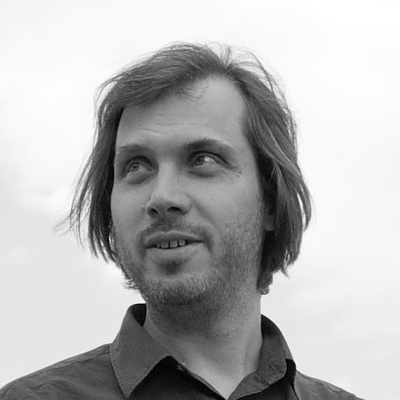
Maksim Ilyukhin
(b. 1975, Zelenograd) is a Russian artist and performer, a member of the art group Art Business Consulting, and the manager of ABC Gallery and Laboratory. He is a lecturer at the British Higher School of Art & Design. He lives and works in Moscow.
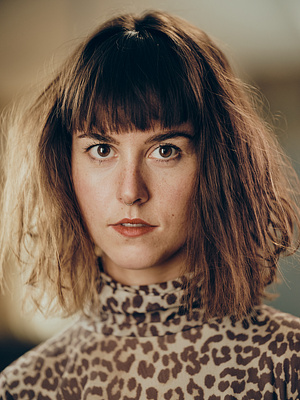
Alice Bucknell
(b. 1993, London) is a North American artist, writer, and educator. Working primarily through video game engines, her current oeuvre explores interconnections of architecture, ecology, magic, and non-human and machine intelligence. She uses speculative fiction and worldbuilding strategies to critique architecture's role in the climate crisis and its contribution to systems of global inequality.
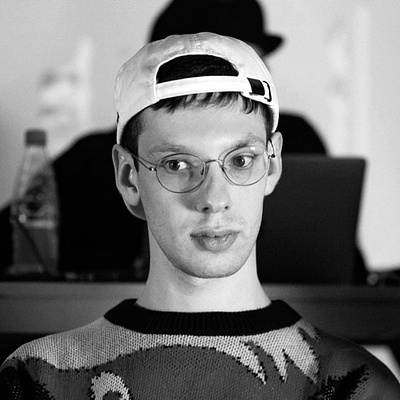
Dmitry Gerchikov
(b. 1996, Smolensk) is a poet and artist. He has published his work in the magazines [Translit], Nosorog, TextOnly, and Greza, among others and won an Arkady Dragomoshchenko Prize Special Mention in 2016. He is the author of the poetry books Make Poetry Great Again ([Translit], 2018) and The Birthday of Time (cae / su / ra, 2021). He lives and works in Moscow.
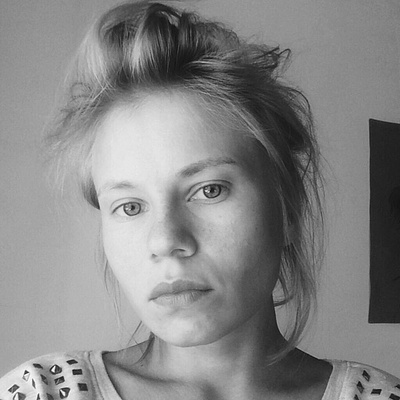
Ekaterina Zakharkiv
(b. 1990, Magadan) is a literary and executive editor (projects include F-pismo, Greza), co-founder and co-editor of Fire Almanac, a contemporary poetry scholar, and translator. She is a doctoral student and employee at the Institute of Linguistics of the Russian Academy of Sciences (Moscow). Her poetry has been published in the magazines Zerkalo, Nosorog, F-pismo, Lana Turner, and Punctum, among others. She was the winner of Arkady Dragomoshchenko Prize in 2016 and is the author of the book Felicity Conditions (AGRO-RISK, 2017). She lives and works in Moscow.
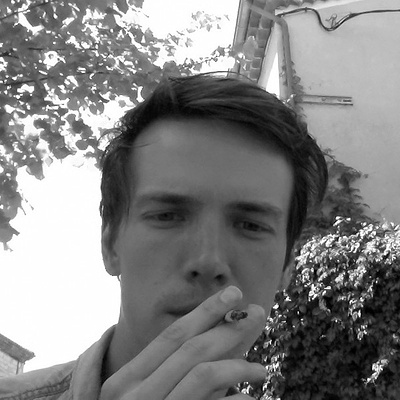
Ivan Kurbakov
(b. 1990) is an author, film director, and sound and video artist. He studied at Maxim Gorky Literature Institute in Moscow and graduated in Film Directing from Moscow School of New Cinema. He has published poetry and essays in the magazine [Translit] and on the online platforms syg.ma and polutona. He is the author of the poetry books The Path Sings (AGRO-RISK, 2019) and Gardens and Lightning (vsegonichego, 2020) and a co-founder and co-editor of Fire Almanac. He lives and works in Moscow.
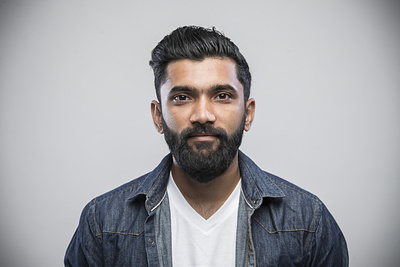
Sahil Naik
(b. 1991, Goa) is an Indian artist whose practice traverses evidence, architecture, mythology, and the internet through the act of witnessing and history making. His current project, Monuments, Mausoleums, Memorials, Modernism, studies the violence of the nation-building project with a focus on South Asia and the non-aligned world. Naik has a postgraduate degree from the Faculty of Fine Arts, M.S. University of Baroda and an undergraduate degree from Goa College of Art. He has exhibited at the Delfina Foundation and Asia House, London, UK; Bridget Donahue as a part of Condo, New York; Beirut Art Center, Lebanon; Khoj International Artists’ Association and the Serendipity Arts Festival, India; and the Aomori Contemporary Art Center, Aomori, Japan. He also participated in Five Million Incidents, organized by Goethe-Institut New Delhi with RAQS Media Collective. His solo exhibitions include All Is Water and To Water We Must Return (2021), Monuments, Mausoleums, Memorials, Modernism (2020), and Ground Zero (2017) at Experimenter, Kolkata. He will be a participating artist at the 5th edition of the Kochi-Muziris Biennale curated by Shubigi Rao (postponed). He lives and works in Goa.
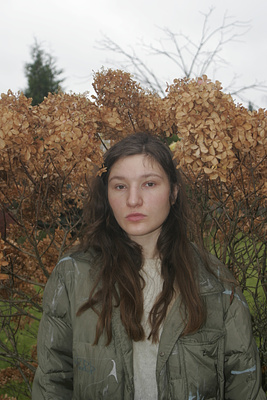
Anna Tagantseva-Kobzeva
(b. 1990, Tashkent) is a multimedia artist. She studied at St.Petersburg State University and the Institute of Contemporary Art (Moscow), and is currently a student at the Academy of Fine Arts in Vienna. She lives and works in Moscow.
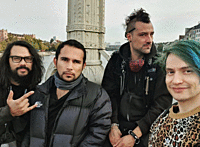
Atractor Studio
(founded 2017, Colombia) is a group of artists who work with mechanical, electronic, and computer engineering techniques from the field of the arts. They focus on the visualization of natural phenomena and mathematical and scientific paradigms related to sociocultural phenomena not only of the western hegemonic culture but also of other ways of knowing and understanding the scientific, through the interaction of the viewer with a digital and analogue substrate.